
Orange County Criminal Court Records
A criminal court record in Orange County is the court's file after the prosecutor files a charge. It is kept through the Indiana trial-court system and local Clerk. It may begin with a charging information, probable-cause material where public, an initial hearing entry, and bond order. Later entries can include motions, notices, plea agreements, trial entries, verdicts, judgments of conviction, sentencing orders, probation orders, restitution, fines, costs, and closure entries.
Orange County criminal cases are handled through Orange Circuit Court and Orange Superior Court, both located at 205 E Main St, Paoli, IN 47454. The county does not use a local district-court model. The Prosecuting Attorney files criminal charges for the State, and the Clerk handles records, filings, payments, and certified copies. A jail booking or officer narrative may exist outside the case file, but the court record is the source for filed charges, pleas, dispositions, and sentences.
The Orange County Prosecutor source was reviewed for the local prosecuting office, and the official page lists the prosecutor role at the Paoli courthouse address.
Search Orange County Criminal Cases
Criminal court records are searched first through Indiana MyCase. Choose a name search when only the defendant's name is known, or choose a case-number search if the Indiana case number is available. Use Orange County as the county filter to avoid unrelated statewide results. Open the public case result to read the Chronological Case Summary, charge list, hearings, pleas, judgments, sentencing, and financial entries that the system exposes.
- Open MyCase and select name or case-number search.
- Enter the defendant's last name and first name, or the exact case number if known.
- Filter to Orange County or to the Orange court shown in the search options.
- Check the case type, filed date, status, and court before opening a result.
- Read the charge section and CCS entries for pleas, hearings, disposition, and sentencing.
- Ask the Orange County Clerk for certified copies or documents not posted online.
For all case types, the broader Orange County court records page explains MyCase search fields and certified-copy fallback steps. Criminal case records should not be confused with a county jail roster, a statewide prison locator, or a consumer background-check report.
Orange County Criminal Case Flow
A criminal case moves through court in stages, and each stage can leave a docket entry or document reference. The sequence may vary by case, but the basic public record flow is consistent: charges are filed, the defendant has an initial hearing or arraignment, pretrial events and motions follow, the case ends by plea, trial, dismissal, or another disposition, and sentencing occurs if there is a conviction.
Case flow: Charges Filed › Initial Hearing / Arraignment › Pretrial / Motions › Plea or Trial › Disposition › Sentencing
| Stage | What the Record May Show |
|---|---|
| Charges Filed | Charging information, count numbers, statute citations, offense level, offense date, prosecutor, and filed date. |
| Initial Hearing / Arraignment | Advisement, plea entry, bond setting, appointment or appearance of counsel, and next hearing date. |
| Pretrial / Motions | Discovery notices, continuances, suppression motions, status conferences, plea deadlines, and court orders. |
| Plea or Trial | Plea agreement, bench or jury trial setting, verdict, dismissed counts, or amended charges. |
| Disposition | Outcome for the case or count, such as guilty, dismissed, acquitted, transferred, or closed. |
| Sentencing | Jail or prison term, suspended time, probation, fines, costs, restitution, no-contact terms, and review settings. |
What Orange County Criminal Records Show
Orange County criminal court records can show both the charge history and the final outcome, but not every field is visible in every case. A felony file may contain multiple counts, amended charges, plea terms, sentencing entries, and probation orders. A misdemeanor may have fewer entries but still show the filed charge, hearing dates, plea, judgment, fines, costs, and sentence. Some probable-cause affidavits or document images may be absent from remote access even when docket entries are public.
| Field | What It Shows |
|---|---|
| Case Number | The Indiana criminal case identifier tying the matter to Orange Circuit Court or Orange Superior Court. |
| Defendant | The person charged, with public identifiers limited by access rules. |
| Charges / Counts | Charge description, statute citation, level, offense date, count number, and amendments where public. |
| Prosecutor | The State's attorney or prosecuting office linked to filed charges and amendments. |
| Bond | Bond order, release terms, cash or surety references, and related hearing entries. |
| Plea | Defendant's formal answer, including guilty, not guilty, or plea agreement entries. |
| Disposition | The final result for a charge or case, including dismissed, guilty, acquitted, or closed outcomes. |
| Sentence | Jail, prison, suspended time, probation, fines, costs, restitution, and other court-ordered terms. |
| Financials | Court costs, fines, restitution, payment plans, bond application, and balances when public. |
Orange County Charges vs Convictions
A charge is an accusation filed in court. A conviction is a judgment after a guilty plea, guilty verdict, or other finding that creates a criminal conviction. One Orange County criminal court record can show charges that were later amended, reduced, dismissed, or resolved with a conviction on a different count. That is why the disposition for each count matters. Do not treat every charge listed in a criminal court record as a conviction.
| Charge | Conviction | |
|---|---|---|
| Meaning | Formal accusation filed by the prosecutor. | Court outcome finding guilt by plea, verdict, or judgment. |
| Timing | Appears near the start of the case or after amendment. | Appears at disposition and sentencing. |
| Record Use | Shows what the State alleged at that stage. | Shows the adjudicated result and sentence basis. |
| Can Change | May be amended, reduced, added, or dismissed. | Can later be appealed, modified, or expunged if the law allows. |
For a closer look at filed counts and charge status after an arrest, use the Orange County arrest records and court charges resource.
Prosecutor Role in Criminal Records
Indiana counties use the title Prosecuting Attorney, not district attorney. Orange County's official Prosecutor page lists Holly Hudelson at 205 E Main St, Paoli, IN 47454, phone 812-723-7103. The staff directory lists Holly Hudelson as County Prosecutor at Ext. 225, Jessica Bansbach as Chief Deputy Prosecuting Attorney at Ext. 119, Kelly Minton as Deputy Prosecutor at Ext. 230, Alyx Nicholson Long as Legal Assistant at Ext. 227, Kirsten Dixon as IV-D Receptionist at Ext. 103, and Sarah Sexton as IV-D Deputy at Ext. 220.
The prosecutor decides what charges to file after law enforcement submits a case. That filed charge can differ from an arrest allegation, jail booking text, or officer narrative. The court record then tracks the filed charge through amendments, dismissals, pleas, judgment, sentence, and post-judgment events. The official prosecutor page also includes child-support and IV-D menu links, which confirms child-support work as part of the office's public-facing functions.
Orange County Prosecutor
205 E Main St
Paoli, IN 47454
812-723-7103 Ext. 225
Prosecuting Attorney Holly Hudelson is listed in the official staff directory.
Public Access to Criminal Records
Indiana public access law and court rules control Orange County criminal court records. IC 5-14-3 is the Access to Public Records Act for public agency records. Court case records also follow the Indiana Rules on Access to Court Records and Administrative Rule 9. Those rules explain why public records can be available at the courthouse, visible in part online, or excluded from remote display.
The Indiana protection-order e-filing guidance is relevant where a criminal matter overlaps with a protection order or safety-related filing. The official source is the Indiana protection-order e-filing tutorial.
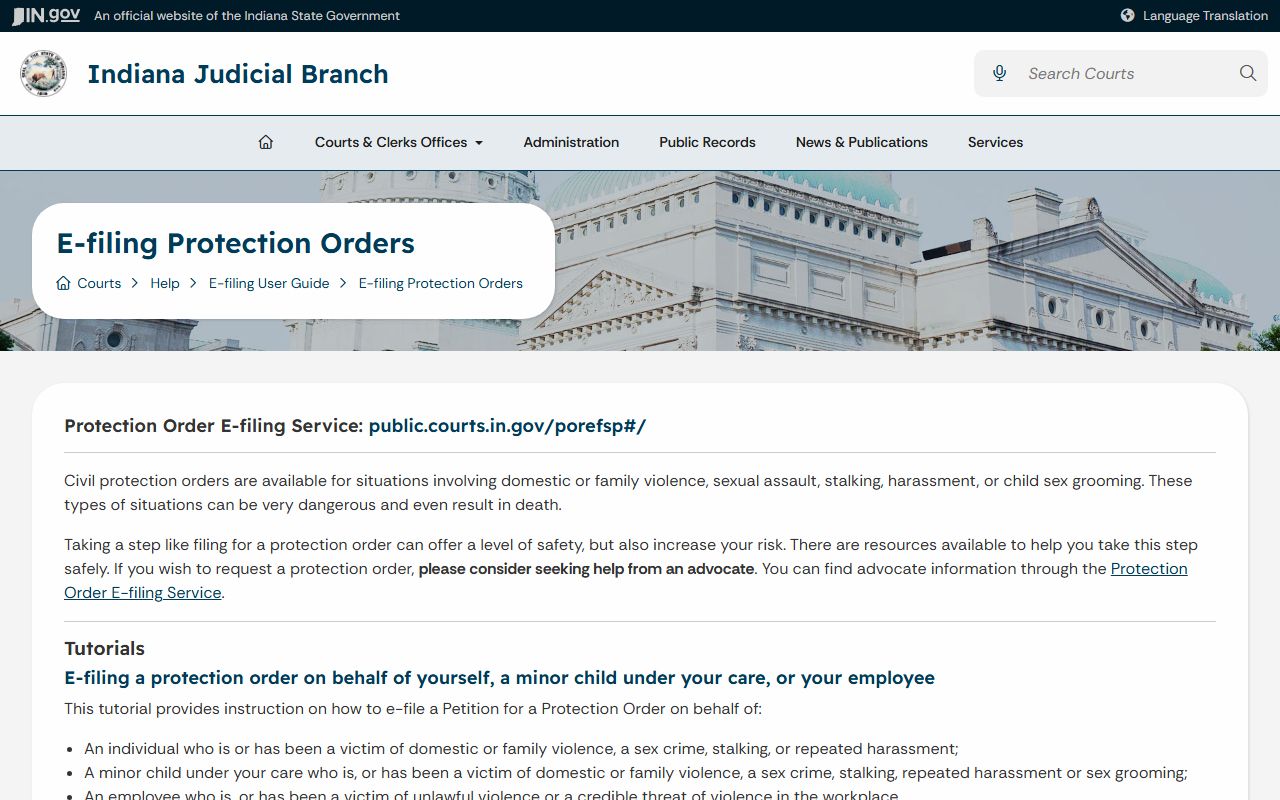
Protection-order records can involve safety limits and protected addresses, so public access may differ from ordinary criminal docket entries.
The Indiana Self-Service Legal Center is available through official court self-service resources.
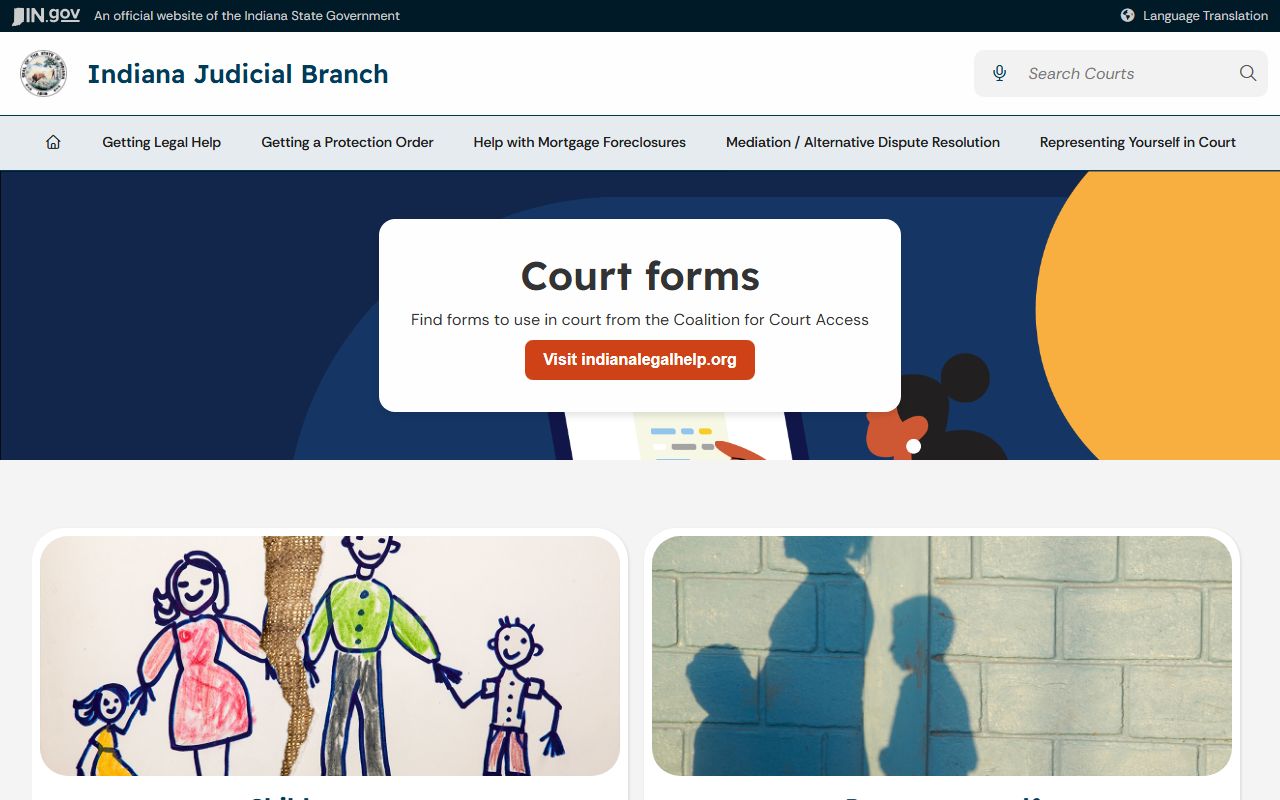
Self-service resources may help identify forms and court processes, but they do not replace the Clerk for certified criminal case copies.
Sealed vs Expunged Criminal Records
Sealing and expungement both limit public access, but they should not be described as simple deletion. Indiana expungement law is found in IC 35-38-9. Eligibility can depend on whether the matter was an arrest-only record, dismissed charge, misdemeanor conviction, lower-level felony, or more serious felony. Waiting periods, prosecutor objections, and the filing court can vary by record type.
| Sealed | Expunged | |
|---|---|---|
| Public Visibility | Hidden or limited from ordinary public access by rule or order. | Limited under the Indiana expungement statute after court relief. |
| Record Status | The record still exists but public access is restricted. | The record may remain available for limited court or law-enforcement purposes. |
| Common Trigger | Court rule, statute, confidential case type, or specific sealing order. | Successful petition under IC 35-38-9 for eligible arrest, charge, conviction, or related records. |
| Orange County Path | Ask the Clerk what public access is allowed for the specific case. | Identify the record class, filing county, waiting period, and any prosecutor response before filing. |
The Indiana General Assembly source for IC 35-38-9 is assigned to Orange County criminal court records research.
The statute supports careful wording: expungement limits public access in eligible cases and should not be promised as erasure.
Restricted Orange County Criminal Records
Not all criminal or criminal-adjacent records are public. Juvenile delinquency, CHINS, juvenile status, and many juvenile probation records are restricted under IC 31-39. Mental-health records, confidential addresses, full birth dates, Social Security numbers, financial-account numbers, medical data, protected victim information, and certain law-enforcement materials may be redacted or excluded. A sealed or expunged criminal case may disappear from public search results or show only limited data.
No Orange County public defender office page was found in the official county pages reviewed. Indiana trial courts appoint counsel for eligible indigent defendants. A defendant who needs appointed counsel should ask the court at the initial hearing or contact the Clerk or court staff for the local appointed-counsel procedure. Do not use a criminal court record lookup to decide eligibility for legal help, employment, housing, credit, insurance, or another FCRA-regulated purpose.
Important: Criminal case search results can be incomplete or restricted; verify any legal use with the Clerk or court.